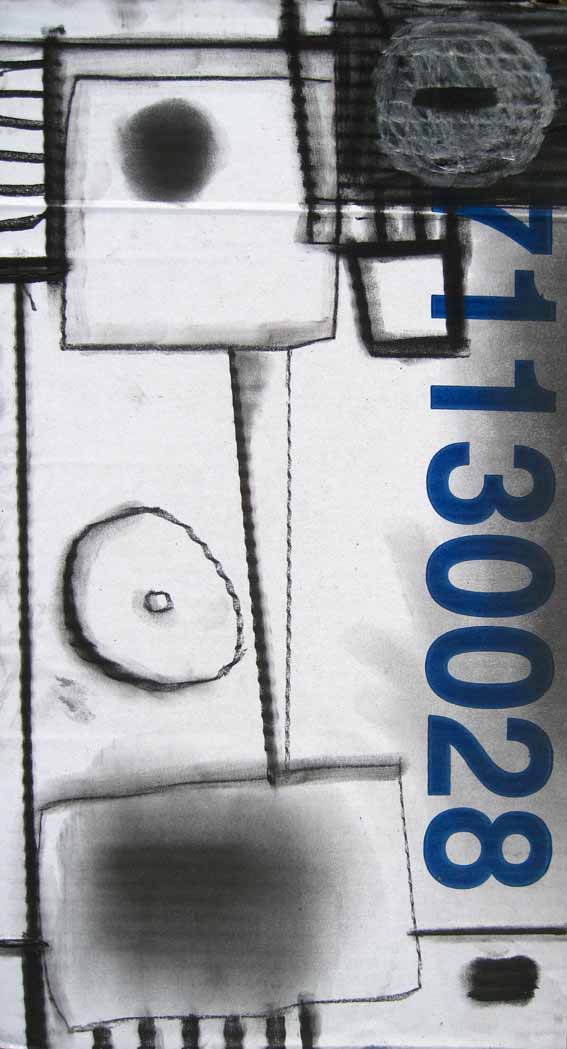
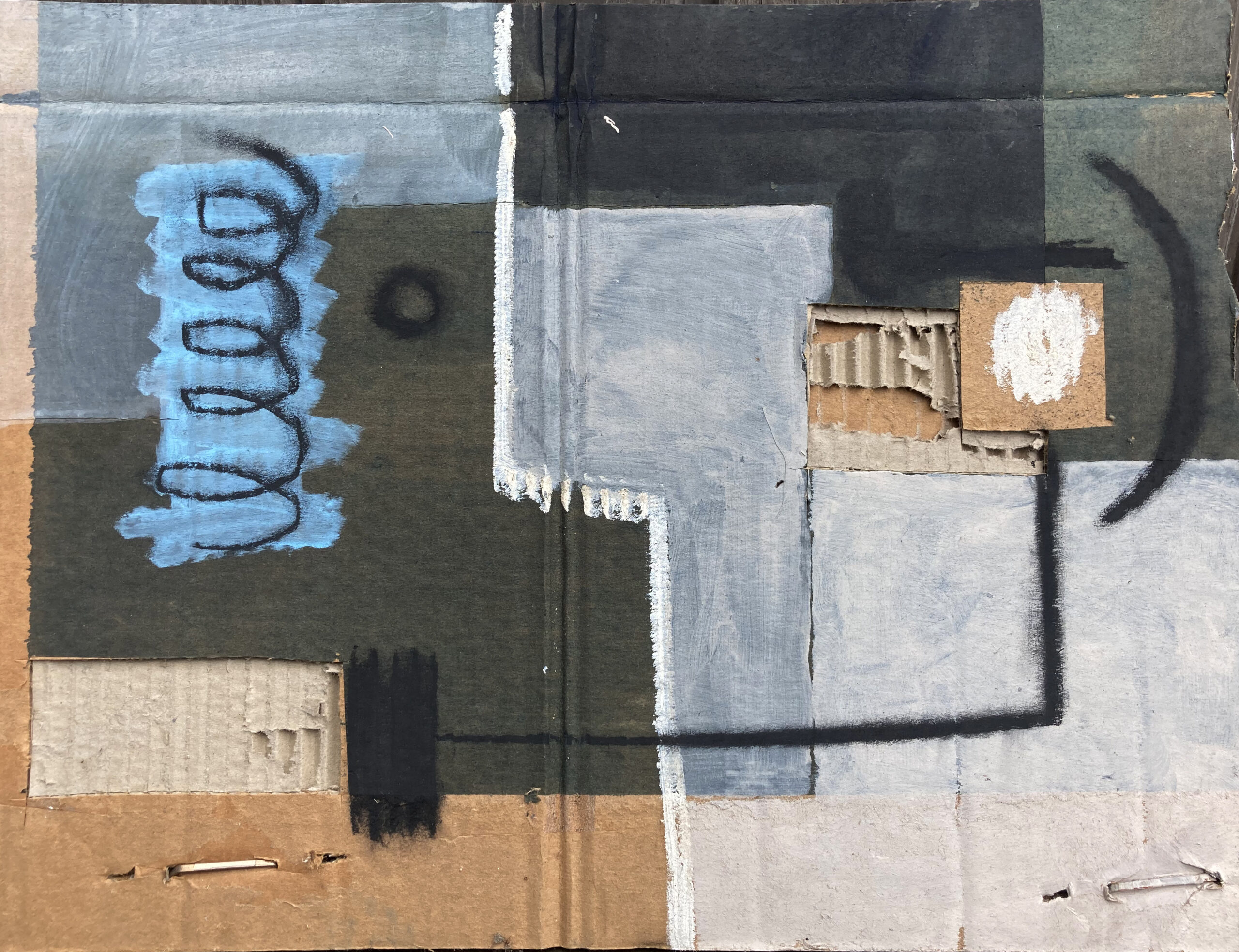
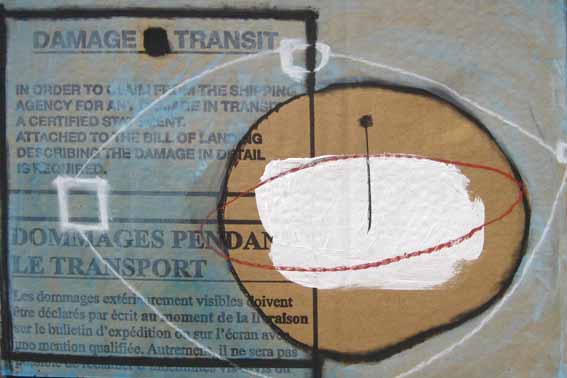
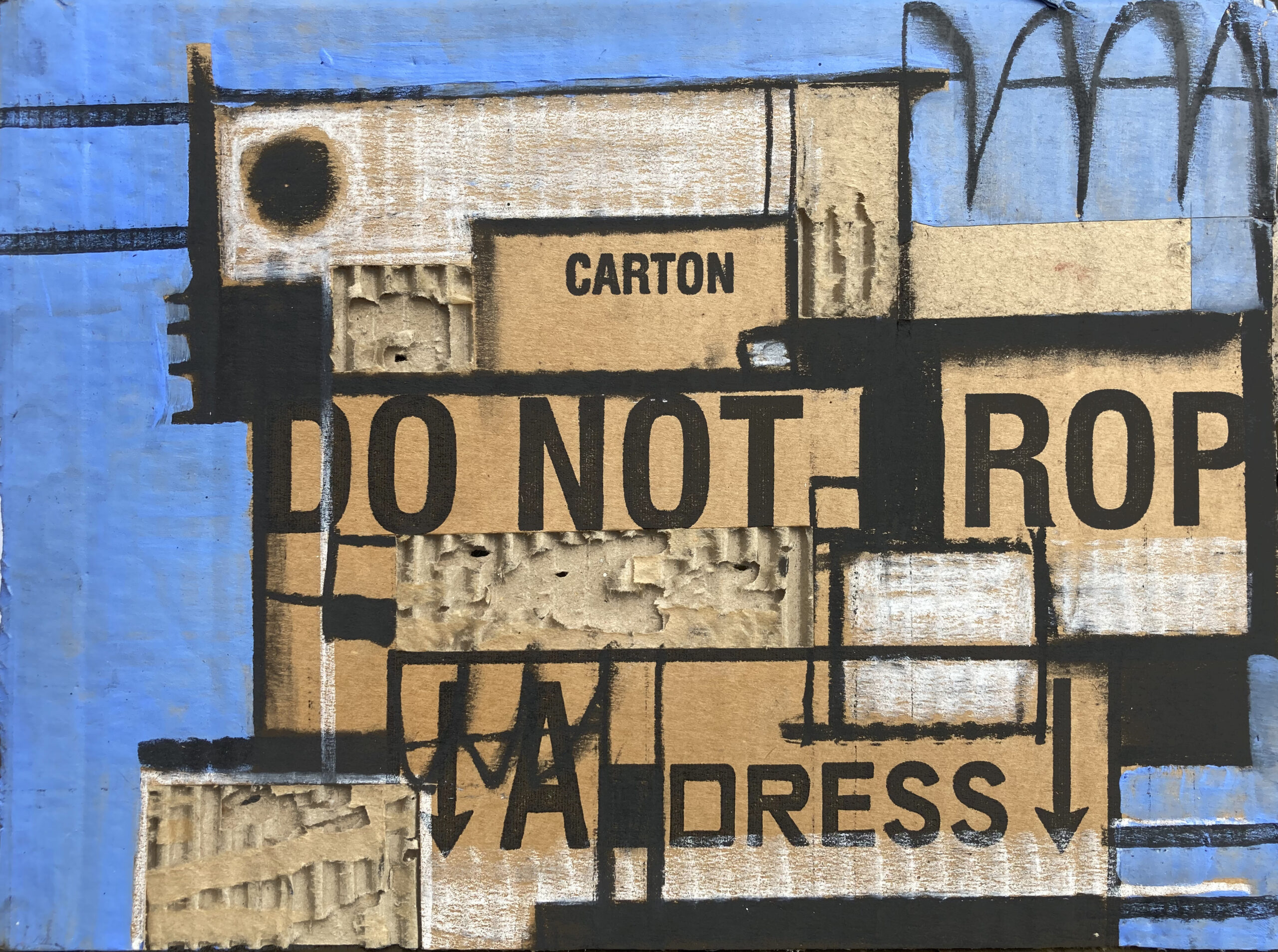
Abstractions 2013. Discarded Materials as a Starting Point Catté doesn’t choose a blank canvas—he starts with what society has already written, printed, stamped, torn. Cardboard boxes arrive in the studio laden with their history: markings like FRAGILE, RAPOP, TRANSPORTSCHÄDEN, barcodes, serial numbers, multilingual labels. The artist doesn’t erase them—he composes with them.
A Dialogue Between Found and Painted This is the essential gesture of the series: maintaining a tension between the pre-existing language of the cardboard (industrial, functional, anonymous) and the added pictorial language (chalk lines, flat areas of color, collages, circles, arrows). Neither one completely dominates. The paint doesn’t overpower the cardboard; the cardboard doesn’t drown the paint. The two coexist, respond to each other, and sometimes contradict each other.
An abstraction rooted in reality Unlike pure abstraction, these works retain traces of the world: a printed “Yes, you can,” a “Thinking ahead, moving forward” logo, numbers, handling symbols. These remnants of commercial language slip into the absurd or the poetic depending on the viewer’s mood. The cardboard still speaks—but differently. Matter as subject The exposed corrugations, the torn edges, the folds, the staples—all of this becomes plastically active. Catté uses the fragility of the material as a quality, not a flaw. It is a painting that accepts its own precariousness. In short, this series subtly questions what we keep, what we throw away, and what art can bring forth from the abandoned ordinary.